

By Jacob Martinez
Across Washington and the broader United States, two intertwined stories are defining this moment: major Supreme Court rulings that shift executive authority, and widespread public concern over economic pressures such as inflation, healthcare costs and tariffs.
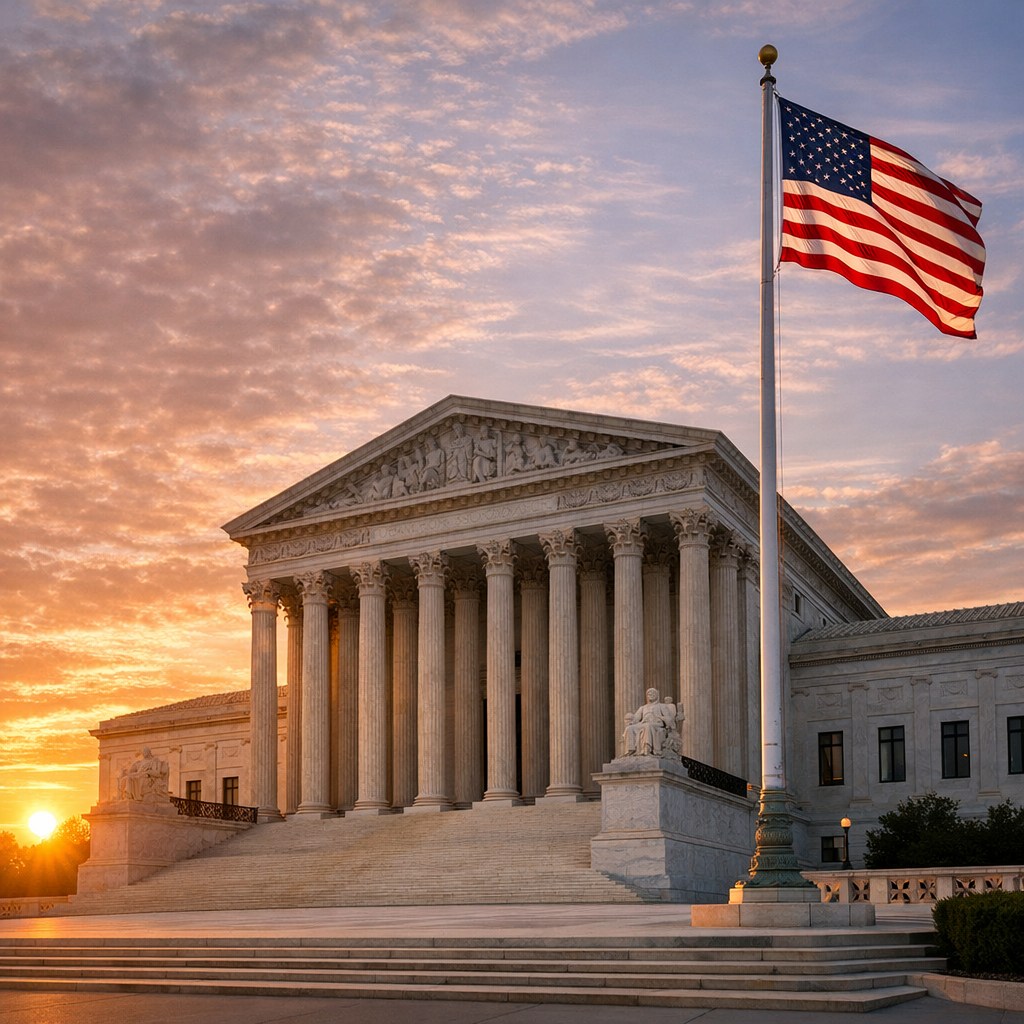
Supreme Court Rulings That Redefined Presidential Power
Earlier this year, the Supreme Court issued several landmark decisions that expanded the president’s power over independent federal agencies and limited the use of sweeping tariffs imposed without legislative approval. In one of those rulings, the court determined that many emergency tariffs imposed under the International Emergency Economic Powers Act (IEEPA) overstepped the president’s legal authority, marking a major reassertion of Congress’s separation-of-powers role in trade policy. This has left parts of the administration’s trade agenda in question, especially where tariffs were used to address national security concerns or global supply chains.
Another ruling drew new lines around presidential authority to remove leaders of independent agencies. While the court affirmed that the president can dismiss top officials in certain independent agencies, it also upheld limits designed to preserve agency independence—especially for entities like the Federal Reserve that are central to economic stability and not meant to swing with political winds.
National Mood More Negative than Optimistic
Meanwhile, Americans are broadly pessimistic about where the economy stands. In surveys conducted this summer, only about one in four rated national economic conditions as “good” or “excellent,” with opposition rising not only among Democrats but also among Republicans who once expressed confidence. Inflation, rising costs for healthcare, food, housing and energy—especially gasoline—remain top concerns for most Americans.
An influential survey found that 60% of U.S. adults believe that current policies have made economic conditions worse. Expectations for improvement in the year ahead are modest: more people expect things to stay the same or worsen than believe there will be real gains.
The Stakes: Trade, Regulation, and the November Midterms
The legal limits placed on tariff power by the Supreme Court have immediate implications for commerce and trade strategy. Some industries reliant on imported inputs are wary of uncertainty, while foreign trading partners are increasingly aggressive in responding to U.S. tariff actions. Credit ratings, international agreements and long-term supply chain planning all hinge in part on how stable and predictable U.S. trade policy can be.
On the regulatory front, agencies once insulated from direct political influence now face clearer, though still bounded, lines of accountability to the president. While the court preserved autonomy for certain independent agencies, the broader trend indicates a tilt toward executive oversight—something corporate boards, states and federal watchdogs are watching closely.
With the 2026 midterm elections approaching in November, every shift in perception matters. Economic frustration seems poised to be one of the defining issues voters will take to the polls. Combined with concerns about executive power and judicial checks, the question for candidates and citizens alike is: where will we draw the balance between leadership and limits?
What to Keep Tabs On
- Future court cases that may challenge executive emergency powers.
- How federal agencies will adapt to narrower regulatory mandates.
- Economic indicators—especially inflation, wage growth and energy costs—that influence public sentiment.
- Election platforms that address voter concerns about affordability, fairness and government powers.
As these forces play out, the tension between sweeping federal authority and democratic constraints shapes not just policy—but the public’s trust in government itself.